Tag: scientists

  • Scientists Collected Deep-Sea Rocks. They Spontaneously Caught Fire in The Lab. | Deep-sea sulfid…

    Scientists Collected Deep-Sea Rocks. They Spontaneously Caught Fire in The Lab. | Deep-sea sulfid…

    Explore the latest developments concerning Scientists Collected Deep-Sea.

    Scientists Collected Deep-Sea Rocks. They Spontaneously Caught Fire in The Lab.

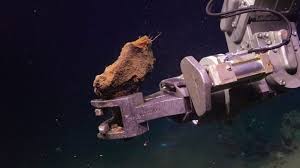
    Scientists investigating the possibility of a 'gold rush' on the bottom of the ocean have hit upon an unforeseen 'landmine'.

    Researchers at the United States Geological Survey (USGS) are now warning that some deep-sea minerals may spontaneously combust when they are brought to the surface.

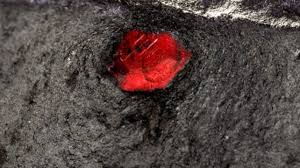
    In 2022, that happened to two samples of metal-sulfide rocks collected from the deep seafloor.

    The event caused temperatures above 100 °C in the lab and completely oxidized the original samples.

    An article on the discovery, published in Scientific Reports, is being shared early, before full editing, to give the public faster access to new research.

    According to the USGS, this is a "potential hazard that could merit special consideration if deep-sea mining of seafloor massive sulfide deposits moves forward".

    Deep-sea sulfide minerals can spontaneously heat and combust when exposed to air

    Official websites use .gov

    A .gov website belongs to an official government organization in the United States.

    Secure .gov websites use HTTPS

    A lock () or https:// means you’ve safely connected to the .gov website. Share sensitive information only on official, secure websites.

    Findings from Escanaba Trough, a seafloor spreading center offshore of the Oregon/California border, highlight a potential hazard that could merit special consideration if deep-sea mining of seafloor massive sulfide deposits moves forward.

    A new USGS-led study found that some metal sulfide-rich rocks collected from Escanaba Trough, a hydrothermal area along the southern Gorda Ridge off the U.S. West Coast, underwent spontaneous combustion during laboratory processing. The finding identifies a potential hazard that could be important to understand if seafloor massive sulfide deposits are ever mined.

    40K 4IN1 Cavitation Body Slimming Machine Beauty Massager Skin Tighten Face Lifting Vacuum Suction With Gel (Fast Shipping)
    40K 4IN1 Cavitation  Body Slimming Machine Beauty   Massager Skin Tighten Face Lifting Vacuum Suction With Gel (Fast Shipping)
    Check it out! »

    Xinhua photos of the day

    China's manned deep-sea submersible Jiaolong prepares to dive after safety inspection in the western Pacific Ocean, Oct. 10, 2026. China's research vessel Deep Sea No. 1, carrying manned deep-sea submersible Jiaolong, arrived at East Caroline Basin in the western Pacific Ocean on Saturday for deep-sea scientific research.

    This marks the 466th dive of Jiaolong, with a planned diving depth of about 4,500 meters. (Xinhua/Li Xin)

    People relax by the shore of Lake Balaton in Siofok, Hungary, Oct. 9, 2026. (Xinhua/Hu Zhixuan)

    People capture sea views at sunrise in Rongcheng, east China's Shandong Province, Oct. 10, 2026. (Xinhua/Chen Yehua)

    Guests visit the Luoyang Museum in Luoyang, central China's Henan Province, Oct. 10, 2026.

    For more detailed information, explore updates concerning Scientists Collected Deep-Sea.

    For more news…

  • ‘Dude! No way!’ Scientists jump for joy over Artemis II moon science results | NASA Releases Arte…

    ‘Dude! No way!’ Scientists jump for joy over Artemis II moon science results | NASA Releases Arte…

    Explore the latest developments concerning 'Dude! No way!'.

    'Dude! No way!' Scientists jump for joy over Artemis II moon science results

    Join The Club for quick access. Enter your email below and we'll send confirmation, and sign you up to our newsletter.

    By submitting your information, you confirm you are aged 16 or over,
    have read our
    Privacy Policy
    and agree to the
    Terms & Conditions. Geographical rules apply.

    Space news, cosmic updates and expert insights straight to your inbox.

    Breaking space news, the latest updates on rocket launches, skywatching events and more!

    Breaking space news, the latest updates on rocket launches, skywatching events and more!

    Sign up to our monthly entertainment newsletter to keep up with all our coverage of the latest sci-fi and space movies, tv shows, games and books.

    NASA Releases Artemis II Lunar Science Data, Images

    NASA’s Artemis II crew traveled around the Moon and back and, along the way, captured stunning imagery and scientific observations of our nearest neighbor. NASA is making the full lunar science dataset from their journey available Wednesday to the global science community and the public for further study.

    More than 800 gigabytes of Artemis II lunar science data – some previously unreleased – have been uploaded to NASA’s Planetary Data System, the public archive for NASA’s planetary missions. This data release includes more than 11,000 full-resolution images and video of the Moon from the crew’s handheld cameras and the Orion spacecraft’s cameras, 8.5 hours of audio recordings of the crew’s scientific observations of the lunar surface, and crew-annotated images.

    MYSTICAL Women's perfume gift box, lasting fragrance fresh, unisex, travel, Mother's Day, Valentine's Day, birthday gift

    MYSTICAL Women's perfume gift box, lasting fragrance fresh, unisex, travel, Mother's Day, Valentine's Day, birthday gift
    Click for more info. »

    Artemis II crew moon photo annotations

    This article has been reviewed according to Science X's
    editorial process
    and policies.
    Editors have highlighted
    the following attributes while ensuring the content's credibility:

    A visualization of a dark moon eclipsing the sun is marked with handwritten notes in this April 6, 2026, screenshot from an Artemis II crew member's tablet.

    NASA astronauts Reid Wiseman (in blue) and Victor "Ike" Glover (in green) and CSA (Canadian Space Agency) astronaut Jeremy Hansen (in red) observed impact flashes and their locations, which are noted on the image. Overall, the astronauts reported seeing five extremely faint "pinprick" bursts of light from their view aboard Orion, which was 46,000 miles (74,000 kilometers) away from the moon at the time. These flashes are sparked by rocky fragments hitting the moon.

    For more detailed information, explore updates concerning 'Dude! No way!'.

    For more news…

  • Scientists opened a sealed envelope after 10 years. Gravity still didn’t make sense | NIST Meas…

    Scientists opened a sealed envelope after 10 years. Gravity still didn’t make sense | NIST Meas…

    Explore the latest developments concerning Scientists opened a.

    Scientists opened a sealed envelope after 10 years. Gravity still didn’t make sense

    For 10 years, physicist Stephan Schlamminger had been chasing one of the most stubborn numbers in science. Now, after a decade of experiments, corrections, and painstaking analysis, the answer was sitting inside a sealed envelope.

    Schlamminger, a physicist at the National Institute of Standards and Technology (NIST), had spent much of the previous decade trying to measure the universal gravitational constant. Known to physicists as big G, this fundamental number determines the strength of gravitational attraction throughout the universe.

    The number hidden in the envelope was the key that would finally unscramble his experimental data and reveal what his team had measured.

    NIST Measures Gravity With Masses Small Enough To Move By Hand

    For over 225 years, scientists have struggled to pinpoint the value of big G, the universal gravitational constant, despite its fundamental role in governing the cosmos. Now, after a decade-long effort, NIST physicist Stephan Schlamminger has unveiled results from a painstaking measurement of this elusive constant.

    “The time had come to open the envelope,” Schlamminger admitted, unsure of the secret number his team’s work would reveal. Despite gravity’s constant presence, big G remains the least well-known of the four fundamental forces, a disparity researchers hope to resolve with increasingly precise experiments using masses small enough to move by hand.

    200 Density 13×4 13×6 Full Frontal 360 HD Transparent Lace 40 46 Inch Long Straight 5×5 Closure Human Hair Pre plucked Wigs

    200 Density 13x4 13x6 Full Frontal 360 HD Transparent Lace 40 46 Inch Long Straight 5x5 Closure Human Hair Pre plucked Wigs
    See the deal! »

    The dynamic landscape of current events often brings forth significant discussions. Monitoring these developments provides crucial insights.

    For more detailed information, explore updates concerning Scientists opened a.

    For more news…

  • Scientists opened a sealed envelope after 10 years. Gravity still didn’t make sense | NIST Meas…

    Scientists opened a sealed envelope after 10 years. Gravity still didn’t make sense | NIST Meas…

    Explore the latest developments concerning Scientists opened a.

    Scientists opened a sealed envelope after 10 years. Gravity still didn’t make sense

    For 10 years, physicist Stephan Schlamminger had been chasing one of the most stubborn numbers in science. Now, after a decade of experiments, corrections, and painstaking analysis, the answer was sitting inside a sealed envelope.

    Schlamminger, a physicist at the National Institute of Standards and Technology (NIST), had spent much of the previous decade trying to measure the universal gravitational constant. Known to physicists as big G, this fundamental number determines the strength of gravitational attraction throughout the universe.

    The number hidden in the envelope was the key that would finally unscramble his experimental data and reveal what his team had measured.

    NIST Measures Gravity With Masses Small Enough To Move By Hand

    For over 225 years, scientists have struggled to pinpoint the value of big G, the universal gravitational constant, despite its fundamental role in governing the cosmos. Now, after a decade-long effort, NIST physicist Stephan Schlamminger has unveiled results from a painstaking measurement of this elusive constant.

    “The time had come to open the envelope,” Schlamminger admitted, unsure of the secret number his team’s work would reveal. Despite gravity’s constant presence, big G remains the least well-known of the four fundamental forces, a disparity researchers hope to resolve with increasingly precise experiments using masses small enough to move by hand.

    12A Human Hair Bundles Deep Wave 26 28 30 Inch 100% Unprocessed Brazilian Virgin Hair Weave 3 Bundles Natural Real Human Hair

    12A Human Hair Bundles Deep Wave 26 28 30 Inch 100%  Unprocessed Brazilian Virgin Hair Weave 3 Bundles Natural Real Human Hair
    Click for more info. »

    Scientists outline how spacecraft could reach a nearby black hole within a century

    A physicist outlines how laser-driven nanocraft could someday reach a nearby black hole and test gravity directly. (CREDIT: Wikimedia / AI-Generated / CC BY-SA 4.0)

    Humanity may someday attempt something considerably more ambitious than photographing a black hole: sending a spacecraft directly to one.

    The idea would require a suitable black hole to be discovered surprisingly close to Earth, along with technologies that do not yet exist. But calculations suggest the journey is not forbidden by physics.

    Cosimo Bambi of Fudan University explores the concept in iScience, describing gram-scale spacecraft propelled by enormous ground-based laser arrays. If a black hole exists 20 to 25 light-years away, a probe traveling at one-third the speed of light could reach it in 60 to 75 years.

    For more detailed information, explore updates concerning Scientists opened a.

    For more news…

  • Scientists in Australia find ‘smoking gun’ evidence of world’s oldest meteorite strike | As…

    Scientists in Australia find ‘smoking gun’ evidence of world’s oldest meteorite strike | As…

    Explore the latest developments concerning Scientists in Australia.

    Scientists in Australia find ‘smoking gun’ evidence of world’s oldest meteorite strike

    Curtin University researchers use innovative techniques to date three-billion-year-old impact crater in Western Australia’s Pilbara region

    A meteorite that struck Earth three billion years ago left behind a “smoking gun” – evidence of the world’s oldest impact crater in a remote part of Australia.

    Ancient rocks in Western Australia’s Pilbara region record the event, which occurred during the Archean eon, a period 4 to 2.5 billion years ago, when tectonic plates were beginning to form and early life emerging.

    To establish a precise date, Curtin University scientists analysed the age of rare geological features, called shatter cones, in an area known as the North Pole Dome crater, publishing their findings in Geology journal.

    Asteroid crater in Pilbara confirmed again as world's oldest

    The oldest known asteroid impact is now believed to be the Pilbara. (Supplied: Curtin University)

    Scientists have confirmed that an asteroid crater in Western Australia's East Pilbara is the oldest in the world.

    It is the second time the ancient crater's age has been pinpointed after a false start last year.

    Some scientists are still disputing the findings, saying there are inaccuracies in the study.

    Scientists have dated a crater in the Australian outback at 3 billion years old, making it the world's oldest known site of an asteroid impact.

    The North Pole Dome, about 1,600 kilometres north of Perth, was the source of controversy last year when it was reported as the oldest in the world, a claim debunked by another group of scientists a month later.

    BM550 Car Battery Tester 6V 12V 24V 100 to 2000 CCA Battery Analyzer 12 Volts Battery Tools Battery System Detect PK KW208

    BM550 Car Battery Tester 6V 12V 24V 100 to 2000 CCA Battery Analyzer 12 Volts Battery Tools Battery System Detect PK KW208
    See the deal! »

    World's Oldest Known Asteroid Crater Is 3 Billion Years Old, Study Confirms

    When scientists disagree, sometimes the truth is somewhere in the middle.

    That has turned out to be true for the age of an impact crater deep in the remote scrublands of Western Australia's Pilbara desert.

    Initially, the team that discovered the North Pole Dome impact structure (aka Miralga) estimated its age at about 3.47 billion years – far older than any other impact evidence discovered to date.

    But then a second team challenged that estimate, arguing that the crater must be less than 2.77 billion years old.

    Now, the original team has studied tiny crystals in the site's impact structures, and determined that the event that created the crater took place around 3.024 billion years ago – confirming its status as the oldest impact crater known on Earth.

    For more detailed information, explore updates concerning Scientists in Australia.

    For more news…

  • Scientists Cracked Open a Mars Meteorite And Found a Big Surprise | Mineral garnet discovered in …

    Scientists Cracked Open a Mars Meteorite And Found a Big Surprise | Mineral garnet discovered in …

    Explore the latest developments concerning Scientists Cracked Open.

    Scientists Cracked Open a Mars Meteorite And Found a Big Surprise

    Cracking open a meteorite that landed on Earth from Mars has yielded an unexpected treasure.

    Hidden inside a fragment of rock, scientists found a few grains of garnet – a mineral that has never before been found in a Martian sample.

    On Earth, garnet often forms under conditions involving intense heat, pressure, or chemical alteration. The right set of conditions for garnet has never been identified on Mars.

    So this meteorite, which is stored in the Royal Ontario Museum's collection, has some explaining to do.

    Did the garnet inside it form on Mars? If it did, what process produced it, and when?

    Mineral garnet discovered in Mars meteorite may reveal how the red planet evolved billions of years ago

    This article has been reviewed according to Science X's
    editorial process
    and policies.
    Editors have highlighted
    the following attributes while ensuring the content's credibility:

    An international team of scientists has identified a completely new type of rock from the red planet and, for the first time, discovered the mineral garnet in a Martian sample. The breakthrough offers a rare glimpse into Mars' ancient past and could help researchers piece together the planet's 4.5-billion-year geological history. The discovery was made by an international research team including James Darling, professor of Earth and planetary science, from the University of Portsmouth's School of the Environment and Life Sciences.

    Sofirn IF23 PRO RGB Light 5000lm XHP70B Powerful LED Flashlight 21700 5V 3A USB C Rechargeable Torch with Magnetic

    Sofirn IF23 PRO RGB Light 5000lm XHP70B Powerful LED Flashlight 21700 5V 3A USB C Rechargeable Torch with Magnetic
    Check it out! »

    The dynamic landscape of current events often brings forth significant discussions. Monitoring these developments provides crucial insights.

    For more detailed information, explore updates concerning Scientists Cracked Open.

    For more news…