Explore the latest developments concerning Solar eclipse tracker:.
Solar eclipse tracker: What time will it hit your location on August 12?
On August 12, nearly one billion people could potentially see a partial solar eclipse, with 15 million in its path of totality.
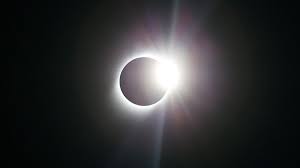
On August 12, 2026, starting at 15:34 GMT, the moon’s shadow will race from the Arctic across Greenland, Iceland and Spain, blotting out the sun for as long as two minutes and 18 seconds.
Wednesday’s eclipse will be mainland Europe’s first total solar eclipse since 1999, with about 15 million people, mostly in Spain, living in the path of totality.
A partial eclipse will be visible across much of Western Europe, parts of Northwestern Africa, and a small portion of the United States. Overall, about 980 million people, nearly one in eight worldwide, can see the sun at least partly covered.
How the solar eclipse could destroy your phone
Hundreds of millions of people across Europe will get the chance to see a partial or total eclipse on Wednesday when the Moon passes in front of the Sun.
Many will be hoping to capture the celestial phenomenon on their phones or cameras, though experts have warned that pointing a lens directly at the Sun could cause permanent damage to a device.
Direct exposure to the Sun, even when partially covered by the Moon, risks overheating a smartphone or digital camera.
Pointing a camera at the Sun for a prolonged period could even burn the photodiodes within the internal sensor, creating dead pixels that cannot be repaired.
JHK Electric Standing Desk Height Adjustable 55×24 Inch Computer Desk Workstation Ergonomic Work Table for Home Office

Will This Week’s Total Solar Eclipse Visible In Australia?
Sign up for the latest news from Marie Claire including offers and discounts we choose to share with you
By joining, you agree to our Privacy Policy & Terms of Use
One of the most remarkable solar eclipses in over two decades is set to take over the skies this week. A total solar eclipse will sweep across the Arctic and into southern Europe, plunging parts of Greenland, Iceland, Spain and a corner of Portugal into darkness, marking the first time mainland Europe has seen this kind of astronomical event in totality since 1999.Unlike February’s “ring of fire” eclipse, which left a thin halo of light around the Moon, the August 12th event will see the Moon fully blocks the Sun, turning day briefly to night for anyone standing in its path.It’s the astronomical event of a lifetime, but unfortunately for those of us living in Australia, we won’t get to glimpse it in real life — but that doesn’t mean we have to miss out altogether.
For more detailed information, explore updates concerning Solar eclipse tracker:.