Tag: system

  • The Solar System Internet: Envisioning a networked future beyond Earth | What is NASA’s Near Sp…

    The Solar System Internet: Envisioning a networked future beyond Earth | What is NASA’s Near Sp…

    Explore the latest developments concerning The Solar System.

    The Solar System Internet: Envisioning a networked future beyond Earth

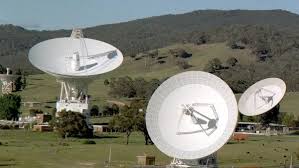
    As humanity’s ambitions extend beyond Earth—evidenced by NASA’s Artemis program and burgeoning commercial lunar and Martian ventures—the limitations of current space communications are increasingly apparent. Traditional point-to-point links, reliant on scheduled radiofrequency (RF) contacts and specialized protocols, struggle with the challenges of interplanetary distances such as propagation delays exceeding 20 minutes one-way to Mars, frequent line-of-sight disruptions, and asymmetric data rates where uplink capacities can be orders of magnitude lower than downlink. In response, researchers have been working to enable a Solar System Internet (SSI), a visionary architecture leveraging Delay Tolerant Networking (DTN) using the Bundle Protocol (BP) to create a standardized, overlay network akin to (but distinct from) the terrestrial Internet.

    What is NASA’s Near Space Network, and how will NASA Artemis astronauts stay in touch with Earth?

    Communication is the lifeline of any space mission. For the Artemis programme, NASA utilises two distinct systems: the Near Space Network and the Deep Space Network.

    Managed by NASA’s Goddard Space Flight Center, the Near Space Network connects with spacecraft up to 2 million kilometres away. It uses a mix of commercial and government ground stations to track rockets immediately after liftoff.

    When the Space Launch System (SLS) rocket lifts off, the Near Space Network is the primary link. It captures critical telemetry data and voice comms as the Orion capsule circles Earth before heading to the Moon.

    Once Orion pushes away from Earth towards the Moon, communication is handed over to the Deep Space Network. This system is designed to handle signals from distances exceeding 30,000 kilometres, ensuring clarity in deep space.

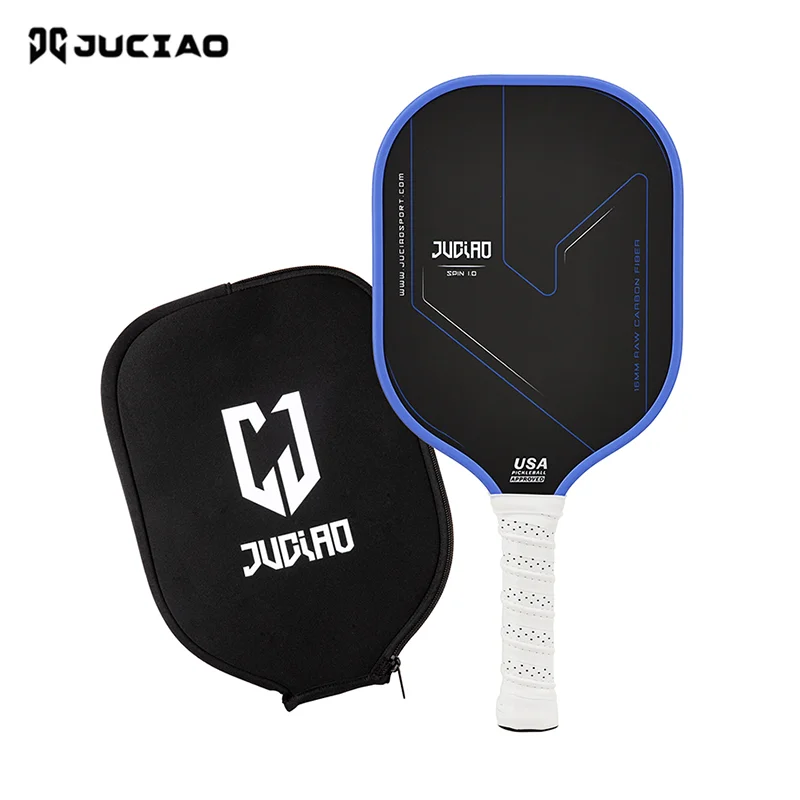
    JUCIAO USAPA Approved Thermoformed Unibody T700 Raw Carbon Fiber Pickleball Paddle Spin Textured Surface With Foam Edge

    JUCIAO USAPA Approved Thermoformed Unibody T700 Raw Carbon Fiber Pickleball Paddle Spin Textured Surface With Foam Edge
    Limited time offer! »

    Astronomers detect a solar system they say should not be possible

    An exoplanetary system about 116 light-years from Earth could flip the script on how planets form, according to researchers who discovered it using telescopes from NASA and the European Space Agency, or ESA.

    Four planets orbit LHS 1903 — a red dwarf star, the most common type of star in the universe — and are arranged in a peculiar sequence. The innermost planet is rocky, while the next two are gaseous, and then, unexpectedly, the outermost planet is also rocky.

    This arrangement contradicts a pattern commonly seen across the galaxy and in our own solar system, where the rocky planets (Mercury, Venus, Earth and Mars) orbit closer to the sun and the gaseous ones (Jupiter, Saturn, Uranus and Neptune) are farther away.

    For more detailed information, explore updates concerning The Solar System.

    For more news…

  • Turkish Korkut Air Defense System to Use Tatra Chassis and Be Localized in Czechia and Slovakia |…

    Turkish Korkut Air Defense System to Use Tatra Chassis and Be Localized in Czechia and Slovakia |…

    Explore the latest developments concerning Turkish Korkut Air.

    Turkish Korkut Air Defense System to Use Tatra Chassis and Be Localized in Czechia and Slovakia

    Czech defense company Excalibur International, part of the Czechoslovak Group (CSG), and Turkish electronics manufacturer Aselsan have signed a strategic cooperation agreement.

    The partners will establish a joint venture to expand their defense capabilities in the European and global markets.

    The main focus will be on technical cooperation in areas such as air defense, electronic warfare, smart ammunition, and border security.

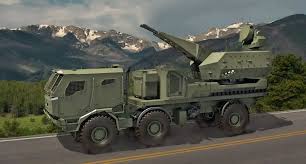
    One of the first results of the partnership was the integration of the Korkut air defense system on the Tatra Force 6×6 wheeled platform. As part of localization, production is planned to be transferred to CSG facilities located in the Czechia and Slovakia.

    CSG and Aselsan to launch Joint Venture and introduce Korkutair defence system on Tatra platform

    February 04, 2026 – Czech defense firm Excalibur International, part of the CSG group, and Türkiye’s defense electronics leader Aselsan have signed a strategic cooperation agreement to establish an EU-based joint venture while simultaneously introducing the Korkut air defence system integrated on the Tatra Force 6×6 wheeled platform. The partnership aims to expand joint defense capabilities for European and global markets.

    The agreement is a significant step toward strengthening defense cooperation not only in Central and Eastern Europe, but also worldwide. The newly established joint venture will focus on technical cooperation in key areas such as air defence, electronic warfare, smart munitions, and border security. As part of the system localization, production is planned to be transferred to CSG facilities in the Czech Republic and Slovakia.

    Diode 3 wavelength hair removal device 808nm 1064nm soprano freezing point hair removal painless permanent hair removal

    Diode 3 wavelength hair removal device 808nm 1064nm soprano freezing point hair removal painless permanent hair removal
    Limited time offer! »

    EU gets a shield: Aselsan's Korkut enters Europe via Czech partnership

    Turkish defense electronics giant Aselsan signed a strategic cooperation agreement with Czech defense firm Excalibur International to establish a European Union-based joint venture and integrate the Korkut air defense system on the Tatra Force 6×6 wheeled platform.

    The partnership aims to expand joint defense capabilities for European and global markets, according to a statement from CSG Group, Excalibur International's parent company.

    The agreement represents a significant step toward strengthening defense cooperation not only in Central and Eastern Europe but worldwide.

    The newly established joint venture will focus on technical cooperation in key areas, including air defense, electronic warfare, smart munitions and border security. As part of system localization, production is planned to be transferred to CSG facilities in the Czech Republic and Slovakia.

    For more detailed information, explore updates concerning Turkish Korkut Air.

    For more news…