Explore the latest developments concerning Flesh-eating Buruli ulcer.
Flesh-eating Buruli ulcer cases are rising. Here's how to protect yourself
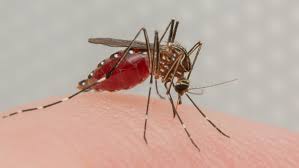
A bite from a striped or common backyard mosquito (Aedes notoscriptus) is one way to get a Buruli ulcer. (iNaturalist: dan_photography/Striped Mosquito/CC BY-NC 4.0)
It starts as a small, painless lump on the skin that is easy to ignore.
But under the seemingly innocuous lump, flesh-eating bacteria are burrowing through fat and muscle.
Warning: Readers are advised that this article includes an image of an open wound.
The skin over the lump then dies, turns black and eventually becomes an open sore that, if untreated, grows.
This is a typical case of Buruli ulcer, a condition that until recently was primarily found in West Africa.
Victoria confirms record 426 Buruli ulcer cases — ABC News Australia
Australia's state of Victoria confirmed a record 426 cases of Buruli ulcer last year — a bacterial skin infection that can affect fatty tissue and muscles. Infection usually occurs in summer and autumn, although the disease remains uncommon among people, ABC News Australia reports.
Buruli ulcer is endemic to the Mornington and Bellarine peninsulas, Geelong and some suburbs of Melbourne. It also occurs in certain coastal areas of Queensland, near Darwin, and on the south coast of New South Wales around Batemans Bay.
The causative agent is the bacterium Mycobacterium ulcerans. Initially, the infection may look like a small painless lump on the skin that is easy to overlook. Over time, the skin above it dies, turns black and can develop into an open ulcer that enlarges without treatment.
Upgraded K2 Portable Venus Legacy Cellulite Treatment Massage Multipolar Vacuum Fat Removal Lipolaser Machine

The dynamic landscape of current events often brings forth significant discussions. Monitoring these developments provides crucial insights.
For more detailed information, explore updates concerning Flesh-eating Buruli ulcer.
Leave a Reply